Licensing Basics
What is technology licensing?
—Turning dormant technology into a revenue asset
Technology licensing is an arrangement in which other companies use your technology and you receive consideration for it on an ongoing basis. But the same word covers different aims. Some licenses are defensive, struck one-to-one with a specific counterparty. Others open the technology to many companies so it is used widely, and the adoption itself generates revenue.
It is the latter that leads to worldwide recurring revenue — opening it up and growing it as a business. The less a technology is being exploited in-house, the more likely it can become a new revenue source in this form.
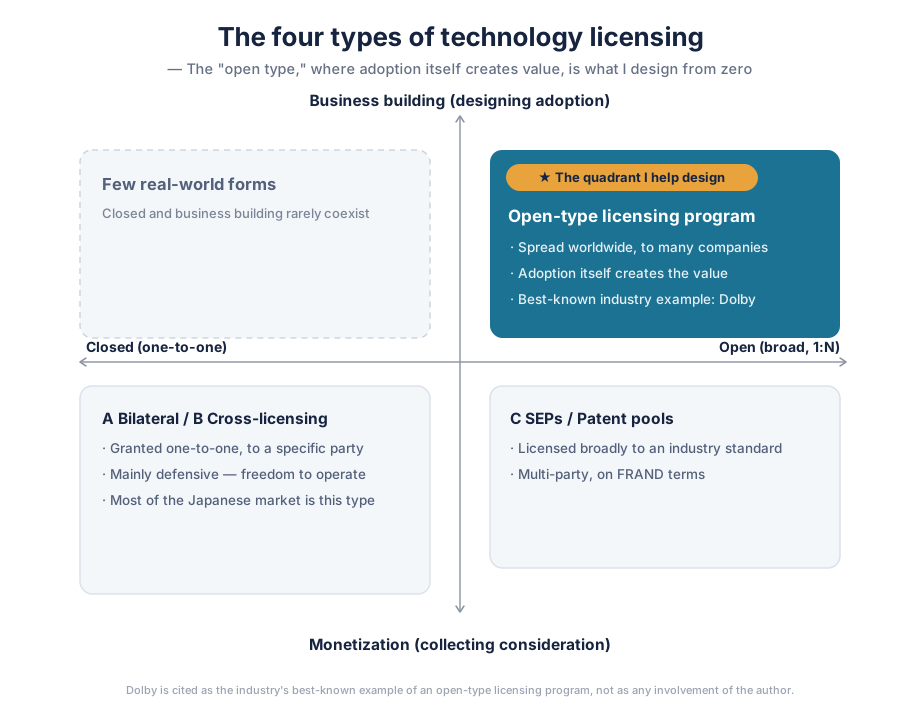
Technology licensing broadly takes four forms. The horizontal axis is the breadth of the grant (an individual contract with a specific party, or an open grant to many); the vertical axis is the aim (primarily collecting consideration, or designing adoption to grow a business). What you most often see in Japan is the lower left — bilateral deals and cross-licensing, mainly defensive. But what turns technology into worldwide recurring revenue is the upper right: the open-type licensing program, where adoption itself creates value. The industry's best-known example is Dolby. This "open × business building" quadrant is what I design from zero and support through launch.
Wondering whether your own technology fits this pattern? Start with the 4-Axis Screener, or see the five processes for the whole path.